info@airmep.in | +91-9810220896 | New Delhi, Delhi, 110015

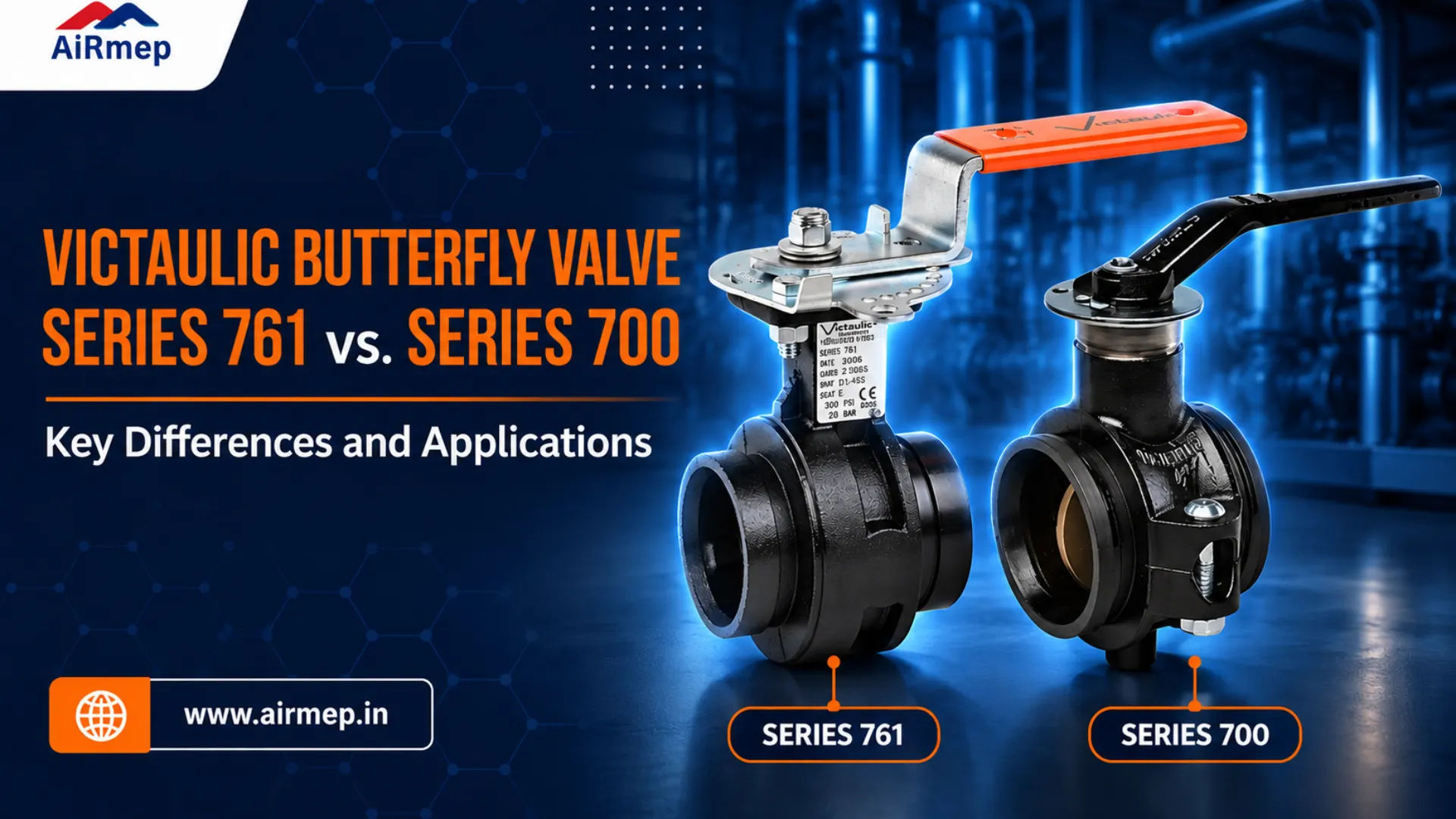
Victaulic Butterfly Valve Series 761 vs Series 700: Key Differences and Applications

The Victaulic Butterfly Valve Series 761 is capable of handling higher pressures up to 300 psi (21 bar) and bidirectional flow and dead-end applications. On the other hand, Series 700 can handle up to 200 psi (14 bar) and features a narrow disc, made to handle low pressures.
The Victaulic Series 761 and Series 700 butterfly valves differ in pressure capacity, sizes, and disc design features. This directly affects the flow performance, pressure drop, and overall working capability of your piping system. That is why having an in-depth understanding of the Victaulic Butterfly Valve Series 761 vs Series 700 is important to avoid pressure loss or compatibility issues in the system, ensuring it works properly. In addition, knowing the available sizes in the market along with their pressure ratings can also help you determine which valve series fits best for your specific application.
Table of Contents
What Is the Victaulic Butterfly Valve Series 761?
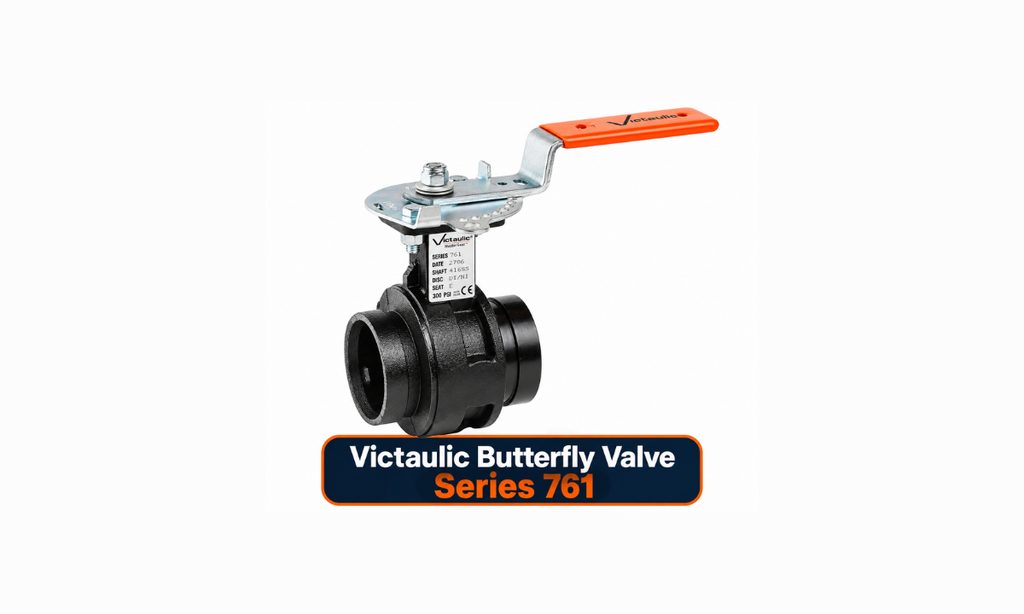
Victaulic Series 761 Butterfly Valve is a grooved-end rotary valve that is used to control the flow of liquid in pipelines. This series efficiently handles 300 psi (21 bar/2,068 kPa) of flow pressure, offering great performance and durability.
| Feature | Specification |
| Size Range | 2 to 12 in (DN50–DN300) |
| Working Pressure | Full vacuum to 300 psi (21 bar / 2,100 kPa) |
| Body Material | Ductile iron (ASTM A536 Grade 65-45-12) |
| EPDM Seat | −34°C to +110°C; suitable for water |
| Nitrile Seat | −12°C to +65°C; suitable for oil |
| Fluoroelastomer Seat | −7°C to +149°C; suitable for higher temperatures and compatible chemicals |
What Is the Victaulic Butterfly Valve Series 700?
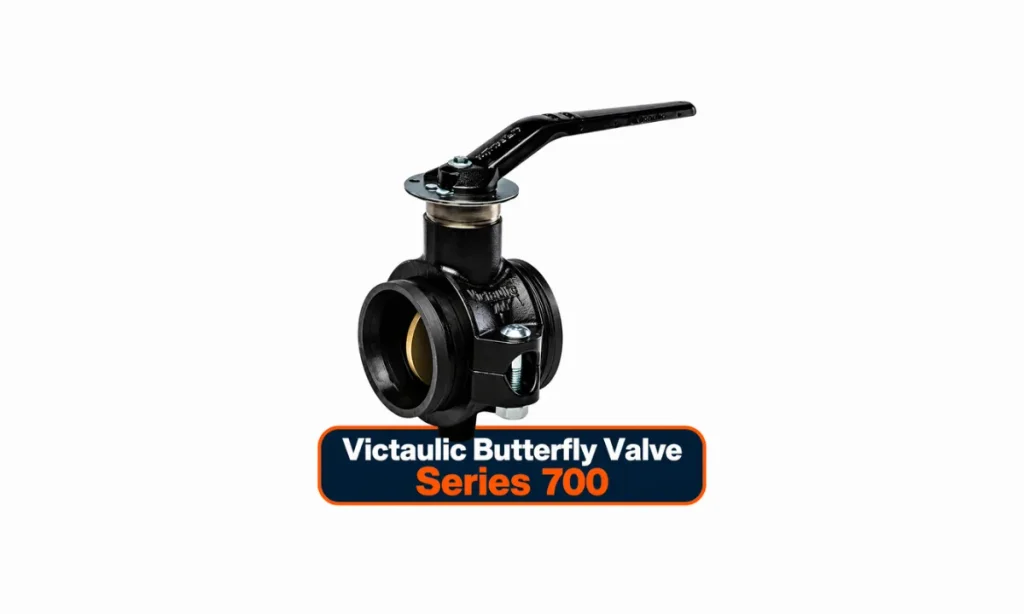
The Victaulic Series 700 Butterfly Valve is a grooved-end, quarter-turn shut-off valve. The series is specially designed to offer bubble-tight sealing up to 200 psi (14 bar/1400 kPa) in piping systems. These Series 700 valves are engineered to be fitted in small to mid-size pipes, with a typical size from 1 ½ inches to 6 inches in diameter.
| Feature | Victaulic Series 700 |
| Size Range | 1½ to 6 in (DN40–DN150) |
| Working Pressure | Up to 200 psi (14 bar) |
| Body Material | Ductile iron housing with elastomer-lined body |
| Disc Material | Standard aluminum bronze; optional 316 stainless steel |
| EPDM Seat | −34°C to +110°C; suitable for water |
| Nitrile Seat | −29°C to +82°C; suitable for oil, subject to service limits |
| Valve Design | Two-piece stem for reduced pressure drop |
| Standard Operator | Two-position lever handle with padlock feature |
Victaulic Series 761 vs Series 700 Butterfly Valves: What Are The Differences
The Victaulic Series 761 and Series 700 differ in many aspects across design and operation. Those differences cover pressure rating, size range, service type, disc material, and more.
Here are the main differences:
1. Pressure Rating
- Series 761: Series 761 is stronger and handles up to 300 psi with a complete vacuum.
- Series 700: A standard one that handles pressure up to 200 psi.
2. Size Range
- Series 761: Series 761 fits in pipes, ranging from 2 inches up to 12 inches.
- Series 700: Series 700 valves are suitable for smaller pipes, from 1.5 inches to 6 inches.
3. Dead-End Service
- Series 761: Specifically designed for bi-directional and dead-end service up to full working pressure.
- Series 700: Confirm dead-end service suitability and applicable pressure limits with Victaulic before specifying the valve for this application.
4. Disc Material
Look at the table below to understand the disc material for both series:
| Feature | Victaulic Series 761 (Vic-300 MasterSeal) | Victaulic Series 700 |
| Standard Disc Material | Ductile iron, ASTM A536 Grade 65-45-12, with electroless nickel coating (ASTM B733) | Aluminum bronze C95300 (ASTM B148/B106) and C64200 (ASTM B283) |
| Optional Disc Material | Stainless steel, ASTM A351 Grade CF8M | Stainless steel Grade CF8M (ASTM A743) |
| Additional Option | Aluminum bronze C95500, for 2–6 in (DN50–DN150) sizes | NA |
5. Applications
- Series 761: Ideal for high-pressure environments in industrial, commercial, and HVAC systems.
- Series 700: Best suited for general applications, such as water distribution, HVAC, and utility piping systems.
6. Disc and Stem Design
- Series 761: Offset disc with a strong stainless steel stem.
- Series 700: Comes in a narrow disc design with a two-piece stainless steel stem.
7. Seat Materials and Fluid Compatibility
- Series 761: EPDM for water, nitrile for oil, and fluoroelastomer for fluids with higher temperatures.
- Series 700: EPDM for water and nitrile for oil. But you may need to check temperature and fluid compatibility before buying.
8. Maintenance
- Series 761: Needs inspection of disc, seat, stem, and operator on a periodic basis.
- Series 700: A regular, routine-based inspection may be required for disc function, seat, stem, and lever operation.
Applications of the Victaulic Series 761 and Series 700 Butterfly Valves
Here are the applications of the butterfly valves of the Victaulic Series 761 and Series 700:
| Application | Series 761 | Series 700 |
| HVAC Systems | Chilled water and cooling water systems | HVAC water distribution systems |
| Water Supply Systems | Industrial and commercial water supply | General water supply and distribution |
| Fire Protection Systems | Applications requiring higher pressure ratings, subject to approval | General water control applications, subject to approval |
| Industrial Piping | High-pressure industrial fluid handling | Low- to medium-pressure fluid handling |
| Commercial Buildings | Large-diameter piping systems | Small- to medium-diameter piping systems |
| Flow Control and Isolation | Isolation in systems requiring higher pressure capability | General flow isolation and shut-off |
| Dead-end Service | Suitable for dead-end service at rated working pressure | Confirm suitability and pressure limits in current product documentation |
| Typical Selection | Higher-pressure systems and larger pipe sizes | Smaller pipe sizes and applications prioritizing low pressure drop |
Victaulic Series 761 vs. Series 700 Butterfly Valve: Which One To Choose
Here is how you can know which one to choose from Victaulic Series 761 vs. Series 700 Butterfly Valve:
Choose Series 761 If:
- You need a pressure rating that goes up to 300 psi (21 bar).
- Your operational need is bidirectional dead-end service.
- You need configurations, such as gear-operated or locking handle.
- You are looking for multiple seat material options for a variety of fluids.
- Your project requires a valve that can fit large diameters.
- You need a valve that can handle demanding isolation requirements.
- A 10-position handle is needed for repeatable valve positioning.
Choose Series 700 If:
- Your piping system is operated within the 200 psi (14 bar) pressure limit.
- You want to reduce flow restriction, which requires a narrow-disc design.
- Your installation uses compatible carbon steel, ductile iron, or plastic piping.
- Your application is about flow performance within the valve’s rated operating limits.
- Your pipeline size is smaller, from 1 ½ to 6 inches.
- A standard aluminum-bronze disc is preferred.
- An optional 316 stainless-steel disc is needed.
What Factors Should You Check Before Buying?
Factors you should check before buying a Victaulic Series 761 or Series 700 Butterfly Valve:
- Working Pressure: Confirm the exact pressure rating of the valve and ensure it matches your system’s maximum operating pressure limits.
- Fluid Compatibility: Make sure the material of the seat and disc is compatible with the fluids being handled.
- Operating Temperature: The material you have selected should also withstand your piping system’s temperature range.
- End Connection: Look for the valve’s grooved ends and ensure they match your pipe size and coupling requirements.
- Installation Space: Make sure that you do not forget to check the dimensions, actuator clearance, and accessibility of the valve.
- Certification and Standards: Also check the fire protection systems, potable water, or other certifications and approvals.
- Maintenance Requirements: Make sure you review the set replacement, inspection access, and spare-parts availability from the supplier.
- Costs and Transparency: Look for a supplier that offers transparent pricing along with the hidden costs such as installation, maintenance, and others.
Therefore, by considering these factors and comparing Series 761 vs Series 700 specifications, you can purchase a suitable Butterfly Valve, suiting your project requirements.
Conclusion
The comparison between Victaulic Butterfly Valve Series 761 vs Series 700 comes down to the pressure requirements, pipe size, flow performance, and operating conditions of your project. The Series 761 turns out to be suitable for applications needing high pressure up to 300 psi (21 bar), having larger pipe sizes, and requiring dead-end service at full working pressure. Whereas the Series 700 shows suitability for pressures up to 200 psi (14 bar) and helps reduce pressure drop.
Reach out to Airmep Sales Corp. if you are searching for trusted Series 761 and Series 700 Butterfly Valves. We are authorized HVAC, fire, and plumbing experts in India who provide high-quality Victaulic Butterfly Valve solutions, including Series 761 and Series 700 for a variety of industrial purposes. Our team also offers product selection and installation support with fast delivery, showcasing our commitment to higher customer satisfaction.
Also Read:
- Butterfly Valve vs Ball Valve vs Gate Valve: Key Differences, Applications & How to Choose the Right Valve
- Greystone Sensors for Data Centers: Temperature, Humidity, Pressure & Air Quality
Frequently Asked Questions:
1. Can Victaulic Series 761 and Series 700 butterfly valves be automated?
Yes, automation is possible with compatible actuators, which depends on the valve configuration and product specifications.
2. How do I know when a butterfly valve needs replacement?
You can understand that a butterfly valve needs to be replaced by constant leaks, severe operational stiffness, or any internal damage.
3. Are replacement parts available for both Victaulic valve series?
Yes, replacement parts for both Series 761 and Series 700 are available.
4. Can I replace an existing Series 700 valve with a Series 761?
You can replace a Series 700 with a Series 761 by considering dimensions, grooved connections, pressure, and installation clearances first.
5. What information should I provide when requesting a valve quotation?
You should consider providing information such as valve series, nominal pipe size, working pressure, fluid type, operating temperature, required materials, and quantity.