info@airmep.in | +91-9810220896 | New Delhi, Delhi, 110015

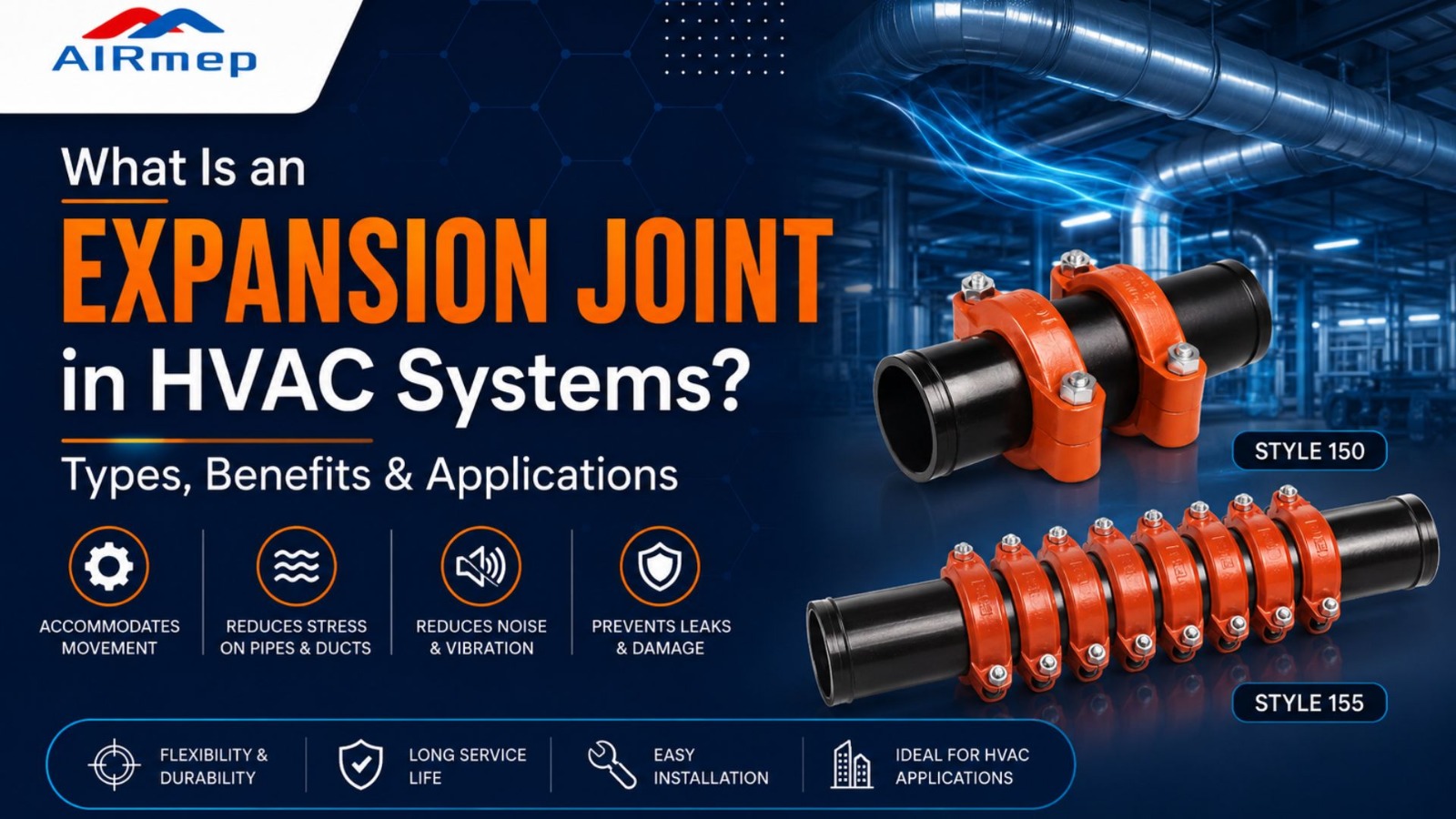
What Is an Expansion Joint in HVAC Systems? Types, Benefits & Applications

Expansion joints are flexible mechanical connectors that are installed inside the pipe and ductwork in HVAC systems. They are known for effectively absorbing dimensional changes caused by thermal expansion and contraction, which dampens equipment vibrations. This prevents mechanical stress that can lead to the pipe cracking or leaking.
Every day fluctuation in the temperatures causes pipes and ductwork to expand and contract. In the HVAC systems, this movement creates significant stress and leads to cracks, leaks, or equipment damage, which further leads to downtime. The expansion joints, which are also known as the main components of HVAC systems, absorb these movements. By doing so, they help systems operate safely and efficiently. Therefore, when you consider purchasing expansion joints, make sure you know the different types, benefits, and common applications.
Table of Contents
What is an Expansion Joint?
An expansion joint is a flexible device inserted in the pipeline and ductwork of the HVAC systems. They work by adjusting themselves to the thermal expansion and contraction that occur in the system, while absorbing vibrations, shocks, leaks, and preventing equipment damage.
Moreover, an expansion joint is made up of a variety of materials, depending on where it will be used. The type of material used includes:
- Metal: Alloys like Inconel, stainless steel, and carbon steel are used for industrial piping systems and bridges.
- Rubber and Elastomers: Materials including EPDM, neoprene, and natural rubber offer high flexibility for pipelines, building construction, and bridge seals.
- Plastics and Composites: Materials like PTFE (Teflon) and composites are used in the production to handle corrosive chemicals or high temperatures.
- Organic Fibers: cork, sponge rubber, or asphalt-impregnated fiberboard are ideal material choices for masonry, concrete slabs, and commercial and residential buildings.
Types of Expansion Joints in HVAC Systems
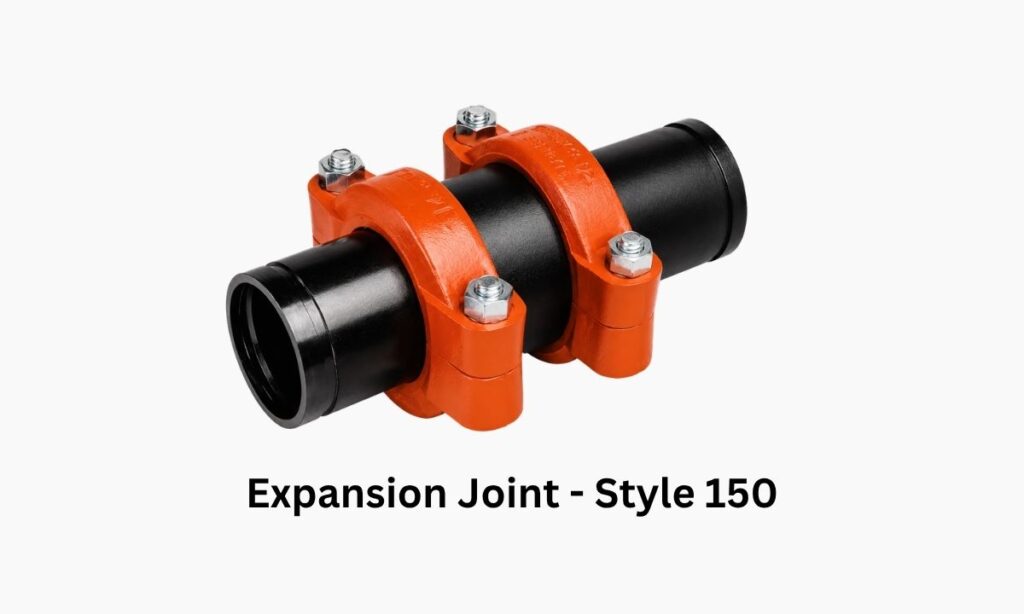
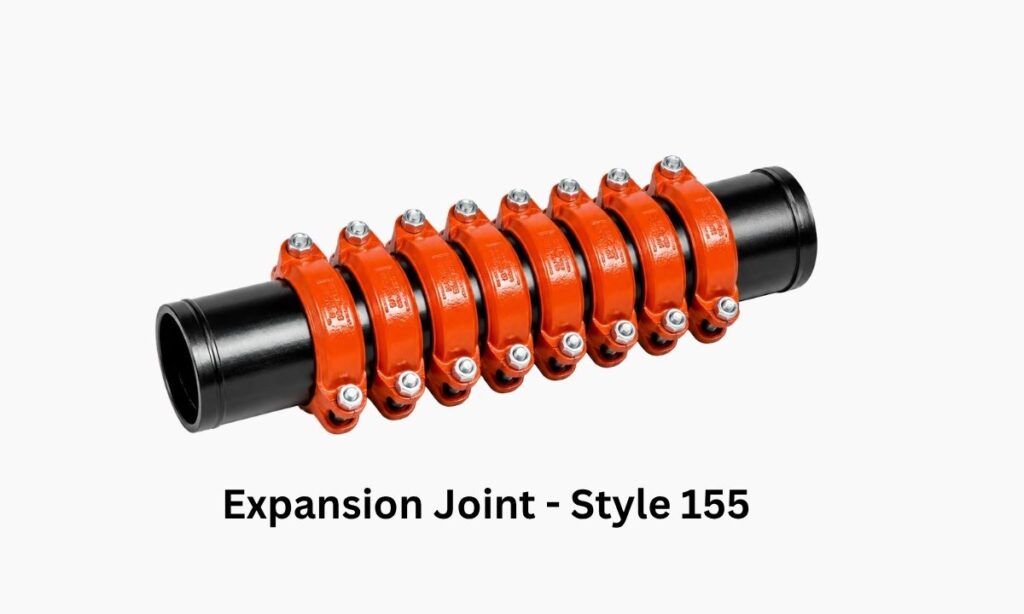
Here are the types of expansion joints available in the market:
1. Metallic (Bellows) Expansion Joints
Metallic Expansion Joints or Bellow are flexible metal pipes that are responsible for handling the shrinking, stretching, and shaking of metal pipes from extreme changes in temperature. They act as a protective component that prevents pipes from bending, cracking, or breaking under heavy pressure.
Types of Movements:
- Axial Movement
- Lateral Deflection
- Angular Rotation
Common Configurations:
- Single Axial Expansion Joints
- Universal Expansion Joints
- Hinged and Gimbal Expansion Joints
2. Rubber Expansion Joints
Rubber and PTEE (Teflon) Expansion Joints are special components placed in the HVAC systems to absorb thermal expansion, contraction, and piping misalignment. These are made from rubber, which is great at reducing equipment vibration and noise in chilled water lines.
Types of Movements:
- Axial Movement
- Lateral Movement (Deflection)
- Angular Movement
- Vibration Absorption
Common Configurations:
- Single Sphere
- Double Sphere
- Spool Type
- Flanged Rubber
- Reducing Expansion Joints
3. PTFE (Teflon) Expansion Joints
PTEE (Teflon) is another type of expansion joint. These are flexible connectors specifically designed with a chemical-resistant, non-sticky Polytetrafluoroethylene (PTFE) inner liner or solid molded body. Due to this, they perform impressively in withstanding aggressive chemicals and high temperatures.
Types of Movements:
- Axial Movement
- Lateral Movement (Deflection)
- Angular Movement
- Torsional Movement
Common Configurations:
- Single Bellows
- Universal Expansion Joints
- Flanged PTFE
- Lined PTFE
- Pressure-Balanced PTFE
4. Fabric Expansion Joints
Fabric Expansion Joints or flexible duct connectors are widely used in HVAC systems. They are non-metallic connectors that effectively reduce equipment vibration and handle thermal expansion. Moreover, they also protect ducts and fans from structural stress and are mainly used in the low-pressure and high-velocity air distribution systems.
Types of Movements:
- Axial Movement
- Lateral Movement
- Angular Movement
- Torsional Movement
Common Configurations:
- Belt Type
- Sleeve Type
- U-Shaped
- Rectangular Expansion Joints



Why are Expansion Joints Important in HVAC Systems?
Expansion joints are important for the HVAC or Heating, Ventilation, and Air Conditioning systems because they effectively absorb thermal expansion and contraction, mechanical vibrations, and reduce stress caused by the misaligned piping system and ductwork.
1. Thermal Expansion and Contraction Management
Pipelines that are restricted from moving require expansion joints so they can stretch and compress without distorting or breaking. This helps prevent intense axial and lateral stress on pipe walls, welds, and fittings.
2. Vibration and Noise Isolation
HVAC systems feature vibration-causing equipment, including chillers, compressors, and pumps. They generate high-frequency vibrations that get unrestricted access to rigid pipeline and ductwork, which can lead to mechanical wear on sensitive components. The expansion joints are flexible connectors that absorb these vibrations.
3. Equipment Damage and Leakage Prevention
In HVAC systems, when the pipes expand against a pump, it can cause premature bearing damage, casing distortion, and mechanical seal failures. But with expansion joints, you can avoid this, as they separate vibration from pipelines, protecting the sealing surfaces, which could have resulted in leakage.
4. Misalignment Compensation
The chances of misalignment occurring in the HVAC systems during the installation process are largely reduced by the use of expansion joints, which correct these alignment differences in the pipelines.
Applications of Expansion Joints in HVAC Systems
Expansion joints are used in various parts of HVAC or Heating, Ventilation, and Air Conditioning systems. Therefore, take a closer look at the applications’ expansion joints below:
| Application | Purpose of Expansion Joints |
| HVAC Piping Systems | Used in chilled water, hot water, and steam pipes to absorb thermal expansion and contraction. |
| Pump and Equipment Connections | Installed near pumps, chillers, and mechanical equipment to absorb vibration, reduce noise, and protect components. |
| Ductwork Systems | Allows ducts expansion and contraction due to temperature changes and reduces vibration and stress on connections. |
| Chiller and Cooling Systems | Handles movement in cooler piping due to temperature changes and equipment operation. |
| Boiler and Heating Systems | Absorbs expansion in hot water and steam piping, reducing stress on pipes and connected equipment. |
| Large Commercial and Industrial HVAC Systems | Used in large HVAC networks with long pipe runs to manage thermal movement and stress. |
| Air Handling Unit (AHU) Connections | Isolates fan and motor vibrations to prevent vibration transfer to ductwork. |
Conclusion
Expansion joints are flexible components used in HVAC systems to reduce vibration, thermal expansion and contraction, and make up for minor alignment differences. They come in four types: metallic, rubber, PTEE (teflon), and fabric joints with different movements and configurations. These flexible components are used in ductwork systems, boilers and heating systems, HVAC piping systems, and other applications, providing you with unrestricted operation while preventing equipment damage.
Airmep Sales Corp. is a reliable partner if you are looking for an Expansion Joint supplier in India. We provide the best-performing expansion joints for your HVAC systems. With a wide range of inventory and logistics support, we provide you with timely delivery. You can also get expert technical support from our team of dedicated engineers who ensure a satisfying experience. So, contact us and get the superior quality expansion joints.
Also Read: What Is a CO₂ Sensor? Working, Types, Applications
Frequently Asked Questions
How do I choose the right expansion joint for an HVAC system?
Choosing the right expansion joint for an HVAC system depends on pipe size, temperature range, pressure, movement type, and other system requirements.
How long do HVAC expansion joints usually last?
The typical life of HVAC expansion joints is from 5 to 20 years.
Can expansion joints be installed in existing HVAC systems?
Yes, expansion joints can be installed in existing HVAC systems.
What happens if an HVAC system does not have expansion joints?
If an HVAC system does not have expansion joints, it can lead to:
– Extreme Thermal Stress
– Unabsorbed Vibrations
– Structural Damage
How often should HVAC expansion joints be inspected?
HVAC expansion joints must be inspected every 6 to 12 months with thorough checks every 3 to 5 years.