info@airmep.in | +91-9810220896 | New Delhi, Delhi, 110015


What Are Grooved Couplings? Types, Uses, and Benefits Explained

Grooved couplings are pipe connectors that join two pipes using a bolted housing and a rubber gasket. They create a secure and leak-proof seal and are quicker to install compared to other joining methods. These couplings are of two types and are used in HVAC systems and fire protection setups.
Grooved couplings are becoming a preferred choice for piping systems. Unlike traditional welded and threaded alternatives that come with high labor costs, safety risks, and longer installation times, they provide fast installation and effective performance. Keep reading this blog to understand everything that you need to know about these couplings, like their types, uses, and benefits.
Table of Contents
What Are Grooved Couplings?
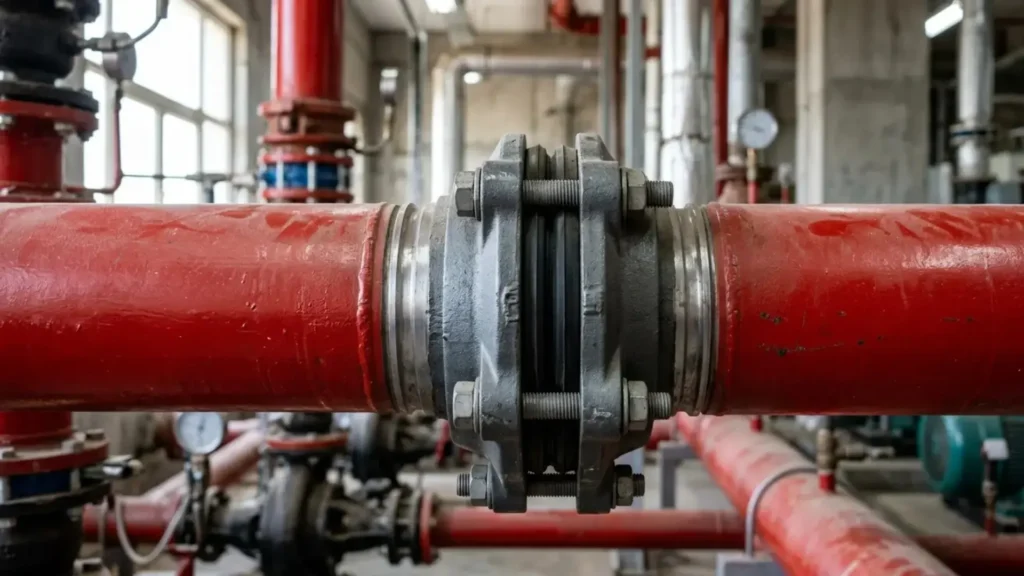
Grooved couplings offer simple and smart ways to join two pipes without welding or threading. They use a strong metal housing that fits into grooves on the pipe ends. Inside this housing is a rubber gasket that creates a leak-proof seal. They are faster to install and much easier to maintain than traditional pipe joining methods.
How Do Grooved Couplings Work?
Grooved couplings work by creating a secure mechanical joint between two pipes using a housing and gasket system. They ensure a tight seal with faster installation compared to traditional joining techniques. Here is how they work:
- Grooves are formed or rolled on the pipe ends using special tools. This ensures the coupling fits securely into place.
- Then, a rubber gasket is placed around the pipe ends, which creates a leak-proof seal when pressure is applied during installation.
- After this, a metal housing is fitted over the gasket, covering both pipe ends, aligning with the grooves, and locking them together.
- Lastly, bolts and nuts are tightened, which locks the housing into the grooves and compresses the gasket to form a secure joint.
Many top engineers and project managers choose Victaulic grooved couplings, as this mechanical lock can handle high pressure and is easy to maintain.
Key Grooved Coupling Types
There are two main grooved coupling types based on how much movement they allow in a piping system. You must choose the right one depending on your system requirements.
1. Rigid Grooved Couplings
These couplings are designed to create a fixed joint, which means they hold the pipes firmly in place. They don’t allow movement between pipes and are perfect for systems where you don’t want any shifting and stable joints are important.
- These provide a firm and secure connection that keeps pipes aligned.
- These are perfect for systems where expansion or vibration is minimal or accurate positioning is a must.
- By reducing the chances of pipe movement and misalignment, they help in maintaining system stability.
- This type of coupling is used in fire protection systems, plant piping, and applications needing stable joints.
2. Flexible Grooved Couplings
As their name suggests, these couplings allow controlled movement between pipes. This makes them a perfect option for systems that experience vibration and slight misalignment, like near a pump or those used in regions prone to earthquakes.
- They help absorb vibration and reduce stress on pipes. This improves overall system stability and performance.
- Compared to rigid connections, these couplings provide faster and easier installation and maintenance.
- This type of grooved coupling is used in HVAC systems, water distribution lines, and industrial applications.
- These allow movement to handle thermal expansion and contraction in piping systems.
3. Other Variants
Other than these two, there are also special grooved coupling types that are used for specific applications.
- Reducing Couplings: These are used to connect pipes of different sizes while maintaining a leak-proof joint.
- Heavy-Duty Couplings: These are designed for high-pressure applications and harsh industrial conditions.
- Stainless Steel Couplings: These are used in corrosive conditions. They are strong and provide resistance against rust.
- Outlet Couplings: These are designed to add a new branch to an existing line without cutting the whole pipe.
Rigid vs Flexible Grooved Couplings: Detailed Comparison
Rigid and flexible grooved couplings mainly differ in how much movement they allow in a piping system. When you choose the right type for your project, you must make a selection based on system design, load conditions, and other requirements.
| Feature | Rigid Grooved Couplings | Flexible Grooved Couplings |
| Movement Capability | Don’t allow movement, keep pipes fixed in position | Allow controlled angular, axial, and rotational movement |
| Pipe Alignment | Maintain accurate alignment of pipes throughout operation | Can adjust the slight misalignment between pipes |
| Vibration Handling | Don’t absorb vibration, best for stable systems | Absorb vibration, reduce stress on piping systems |
| Application Type | Best for systems that require stable and strong connections | Best for systems with expansion, contraction, and movement |
| Maintenance | Low maintenance required due to stable connections | Easier maintenance in systems where movement is expected |
| Common Uses | Fire protection systems and fixed pipelines | HVAC systems, water distribution and industrial pipelines |
| Support | Act as a structural component | Reduce stress on the piping system |
Applications & Industries Where Grooved Couplings Are Used
Today, you will find grooved coupling joints in every large factory and building. Trusted suppliers, like Airmep Sales Corporation, provide these parts for fire protection systems, HVAC units, and water treatment plants. As they can be installed quickly in remote areas without any need for heavy welding equipment or a continuous power source, they are used in mining and oilfields.
- Fire Protection Systems: They use the couplings for sprinkler pipelines. These couplings provide secure joints and easy maintenance during inspections or system upgrades.
- HVAC Systems: These systems rely on grooved couplings to handle chilled water and cooling lines. Flexible couplings manage thermal expansion and vibration in large buildings.
- Water Supply and Distribution Systems: In these systems, these couplings provide leak-proof sealing and simplify repair and replacement work.
- Oil and Gas Applications: These industries benefit from the quick installation and easy maintenance features of these couplings.
- Industrial Processing Plants: These plants use grooved couplings in piping networks where stable connections, easy modification, and fewer downtime issues are a must.
- Mining and Construction Projects: In these projects, these couplings are used for temporary and permanent pipelines. They help construction and mining workers with the quick assembly and disassembly of systems.
- Marine and Offshore Applications: These couplings provide great resistance against corrosion, so they are used in piping systems in marine and offshore applications.
What Are the Benefits of Grooved Couplings?
While Victaulic invented the mechanical grooved coupling system, many manufacturers produce grooved couplings. These couplings offer many advantages over traditional pipe joining methods. Here are the main benefits that make them a preferred choice for modern piping projects in various industries:
- Faster Installation: They can be installed up to three to four times faster than welding. This helps you reduce your labor costs and easily meet project deadlines.
- Enhanced Safety: As no welding is involved, the risk of fire on the job site is eliminated. This makes the work environment safer for workers and protects expensive machinery.
- Easy Maintenance: In case you need to clean or fix the piping system, you only need to unbolt the coupling. After maintenance work, you can bolt it back on without damaging the pipe.
- Vibration Dampening: Flexible coupling connections absorb noise and vibrations from pumps and motors. This protects the entire system from damage over time.
- Flexibility in System Design: Grooved couplings allow easy modifications and future expansion of piping systems. These sections can be added or adjusted without major rework.
How to Choose the Right Grooved Couplings for Your Project?
Selecting the right coupling depends on the pressure of your system and the type of liquid or gas you are moving. It is always advised to take help from experts, like Airmep Sales Corporation, to ensure the gasket material is compatible with your chemicals. Here are the factors that will help you make the right choice:
- Firstly, you need to understand your system requirements, like checking pressure ratings, temperature conditions, and the type of fluid flowing through the pipes.
- If your system needs fixed alignments, you must choose rigid couplings, while opting for flexible couplings to handle vibration, expansion, and slight movement.
- Make sure the coupling matches the pipe size and diameter, and groove specifications for a secure connection.
- For piping systems in corrosive conditions, consider coated couplings made from durable materials that provide longer service life.
- You must evaluate installation and maintenance needs to select couplings that ensure easy access, faster installation, and minimal downtime during repairs or system upgrades.
- When you select your supplier, make sure you receive products that meet standards and safety guidelines for your specific application or industry.
Frequently Asked Questions (FAQs)
1. How do I know if a grooved coupling is tightened properly?
You know a grooved coupling is tight enough when the bolt pads meet metal-to-metal. So, when you install the couplings, tighten the bolts until the metal housings touch.
2. Do grooved couplings require regular maintenance?
Although grooved couplings require minimal maintenance, periodic inspection of bolts and gaskets is a must. Regular inspections will help you ensure seal stability and proper sealing in high-vibration conditions.
3. What industries commonly use grooved couplings?
Victaulic grooved couplings are used in fire protection, HVAC, water distribution, oil and gas, and industrial piping systems. Their ease of maintenance and stability make them a preferred choice.
4. Can grooved couplings be reused after removal?
They can be reused after removal multiple times. However, the housing and gasket must be undamaged. It is recommended to replace the rubber gasket to maintain a leak-proof seal if it is not in good condition.
5. Do grooved couplings work with plastic pipes like PVC or HDPE?
Special grooved couplings can be used with plastic pipes like PVC and HDPE. You must use specially designed couplings that are compatible with these materials.
Why Choose Airmep Sales Corporation as Your Supplier
Grooved couplings have become a trusted solution for modern piping systems. Their advantages, like fast installation, strong sealing, and easy maintenance, make them a better option than other alternatives. Whether you’re working on HVAC systems, fire protection, or industrial pipelines, choosing the right type of coupling ensures better performance.
Moreover, you must work with a supplier that offers genuine products and helps you understand different types and assists you in making a smart choice. Make Airmep Sales Corporation your trusted supplier of high-quality grooved couplings and piping solutions. We work with top manufacturers like Victaulic and provide quality products that meet required standards.
- Get genuine products from trusted brands and ensure long-term performance and value.
- Our experts help you choose the right coupling for your specific application.
- We support timely delivery and consistent supply for small and large projects.
- We support clients from multiple industries and offer services at fair pricing.
Grooved couplings have changed the way we used to build and maintain piping systems. Whether you need a trusted solution for a simple HVAC upgrade or manage a large fire-protection project, Airmep Sales Corp. delivers quality components. We help you choose the right type and make sure your systems are ready for the future.
Also Read: How To Find the Best Pipe and Fittings Manufacturers in India?